Tampa Bay New Home Financing
Construction Loans in Tampa
Financing for custom homes, spec builds and lots, from the first draw to the final inspection.
Construction Loans in Tampa, Florida
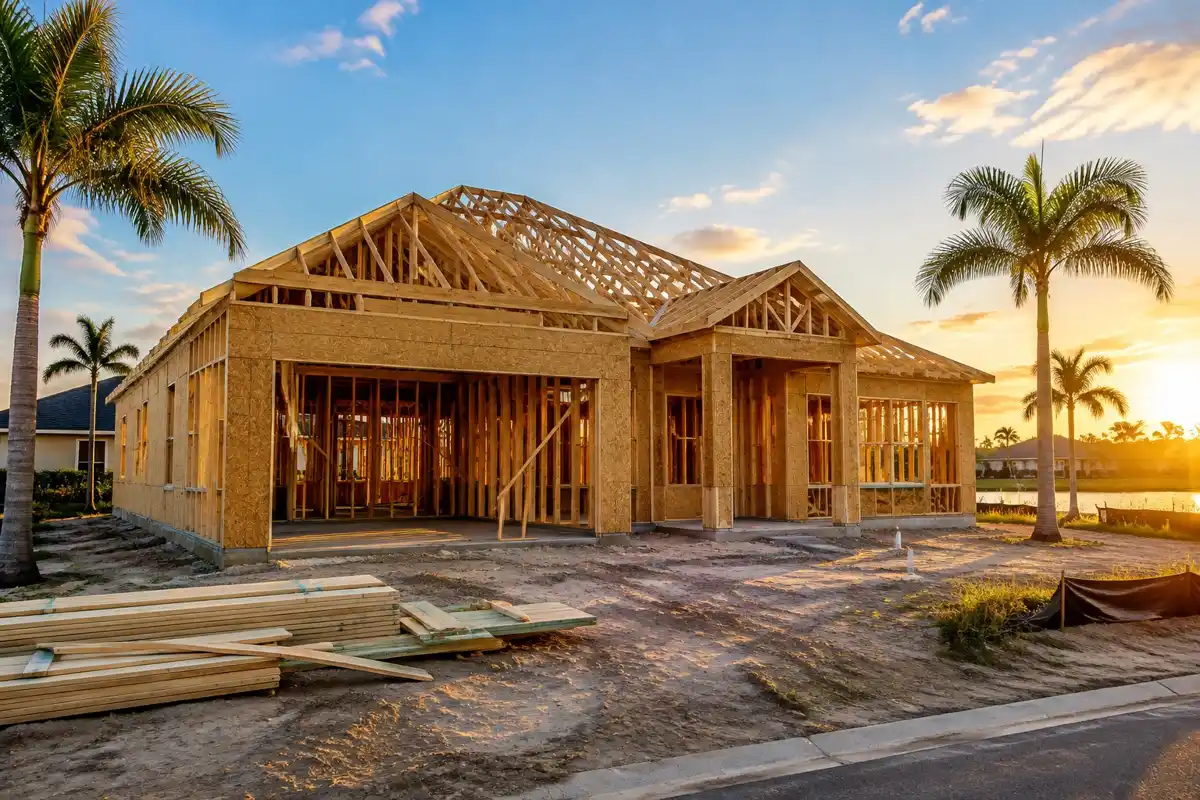
Building a house is a different financial event from buying one. There is no finished property for an appraiser to walk through, no keys on closing day, and the money goes out in stages while trusses go up and drywall goes in. A construction loan is built for that reality. Instead of funding one lump sum, the lender approves a total project budget and releases funds in draws as the work reaches agreed milestones.
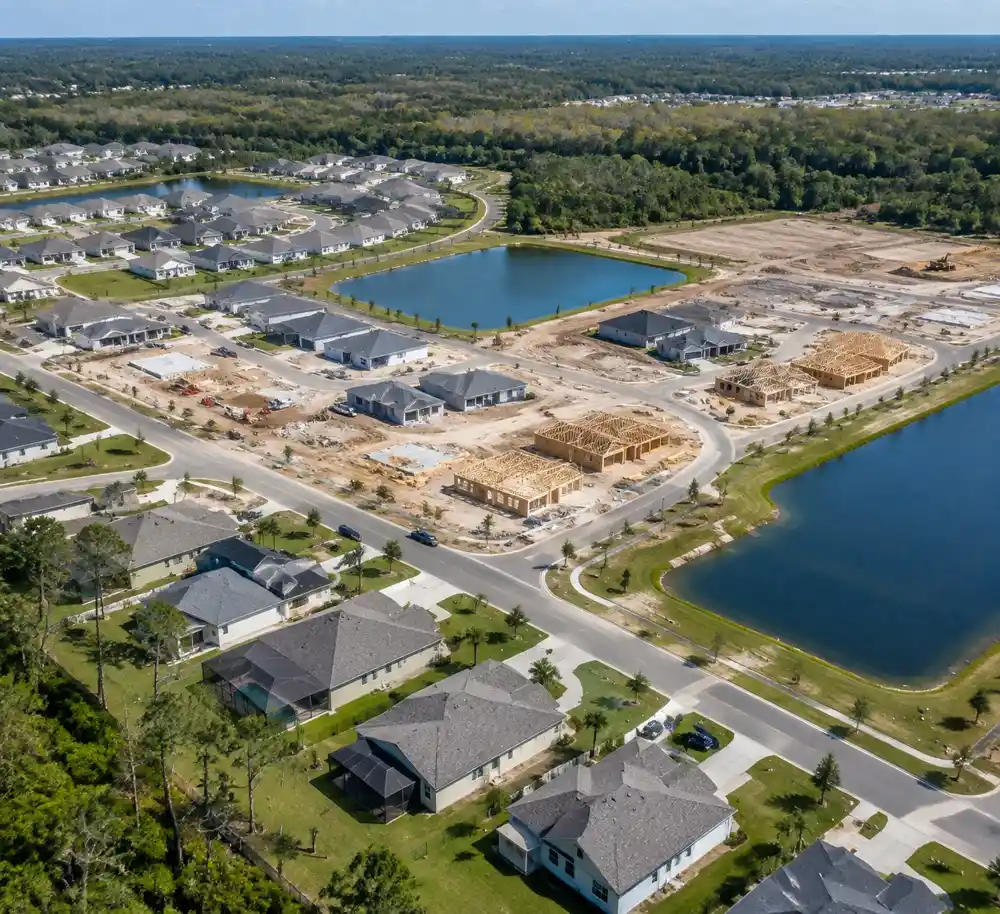
Tampa makes a natural home base for this kind of financing. Hillsborough, Pasco, Pinellas, Polk and Manatee counties continue to see new subdivisions, infill teardowns and owners who want a home designed around the way they live rather than a resale that almost fits. Some of our borrowers already own a lot in Seminole Heights or out past Plant City. Others have a signed contract with a custom builder and need the financing lined up before permits are pulled.
Whatever stage you are at, the first conversation is the same: what are you building, who is building it, where, and how will the loan be repaid when the house is done? Once we understand those four things, we can point you toward the program that fits, whether that is a single-close construction-to-permanent loan for your own residence or short-term funding for a spec home you plan to sell.
Loan Programs
Construction financing options
From buying a lot to closing on a finished home, these programs cover the main ways Florida projects get financed.
Ground-Up Construction Loans
Fund a new home from cleared lot to certificate of occupancy, with money released as each phase is finished.
Learn moreConstruction-to-Permanent Loans
One loan that funds your home's construction and then becomes your long-term mortgage once you move in.
Learn moreSpec Home Construction Loans
Short-term financing for builders putting up homes to sell, sized to project cost and the finished value.
Learn moreLot and Land Loans
Secure a buildable lot or acreage now and line up construction financing for when you are ready to build.
Learn moreConstruction Loans for Investors
Business-purpose financing for investors building rental homes, duplexes and build-to-rent projects.
Learn moreConstruction Loan Requirements
The credit, cash, documents and builder standards most construction programs expect, explained in one place.
Learn moreFinancing That Follows the Build
We think a construction lender should understand job sites as well as spreadsheets. That means knowing why a slab inspection matters before framing money moves, why a hurricane-season schedule needs cushion, and why the builder's contract and the lender's budget have to agree line by line.
Our role is to translate. We help you assemble plans, specs, a cost breakdown and builder credentials in the format underwriters expect, then stay involved through closing so the first draw is not a surprise. You get a straight answer about what a program requires, and you hear early if something in the file needs attention.
Why investors work with us
Construction-first thinking
We start with your plans, budget and schedule, because those documents drive every construction loan decision.
Builder approval guidance
We explain what lenders want to see from your builder, from license and insurance to recent completed homes.
Draw schedule clarity
You will know how many draws to expect, what triggers each one, and how inspections fit in before you close.
Owners, builders and investors
We work with families building a primary home and with investors building spec or rental property.
Local permitting awareness
We understand that Hillsborough, Pasco and Pinellas each move at a different pace, and we plan timelines accordingly.
How Construction Loans Work in Tampa
A construction loan starts with a budget. Your builder prepares a detailed cost breakdown covering site work, foundation, framing, roofing, mechanicals, finishes and everything in between. The lender reviews that budget, the plans and the builder, then orders an appraisal based on the home's value once it is finished. That future value, called the as-completed value, sets how much the lender is willing to commit.
At closing, the loan is approved for the full project amount but only a portion is funded, often the lot payoff or purchase and some early soft costs. From there, the builder requests draws as phases are completed. An inspector visits the site, confirms the work, and the lender releases the matching funds. During construction you usually pay interest only on the money that has actually been drawn, so early payments tend to be small and climb as the house takes shape.
When the certificate of occupancy is issued, the loan either converts into permanent financing or is paid off through a sale or a separate mortgage, depending on the program you chose at the start.
Choosing Between One Closing and Two
Owners building their own home often decide between a single-close loan and a two-step approach. With a single close, the construction phase and the long-term mortgage live under one set of documents. You qualify once, pay one set of closing costs, and the loan rolls into its permanent phase when the house is complete.
A two-close structure treats construction as a short-term loan and arranges the permanent mortgage separately near the end of the build. That route can offer flexibility if your finances are expected to change during construction or if you want to shop the end loan later, but it means qualifying twice and paying two sets of closing costs.
Neither path is right for everyone. The better fit depends on how long the build will take, how predictable your income is, and how much certainty you want on day one.
What Lenders Look for in Your Builder
On a construction loan the builder is part of the underwriting. Lenders want to know the person running your job can deliver the home on budget and on schedule, because the collateral does not fully exist until they do. Expect a builder review that includes a Florida contractor license, general liability and workers' compensation coverage, references, and a list of recently completed homes.
Some lenders keep an approved builder list; others review each builder as files come in. Builders who have closed construction loans before usually move through this step quickly. A first-time custom builder or a company new to Florida may need more documentation. If you plan to act as your own general contractor, tell us early, since owner-builder projects are allowed by only a limited set of programs and usually require a licensed background.
Plans, Specs and the Cost Breakdown
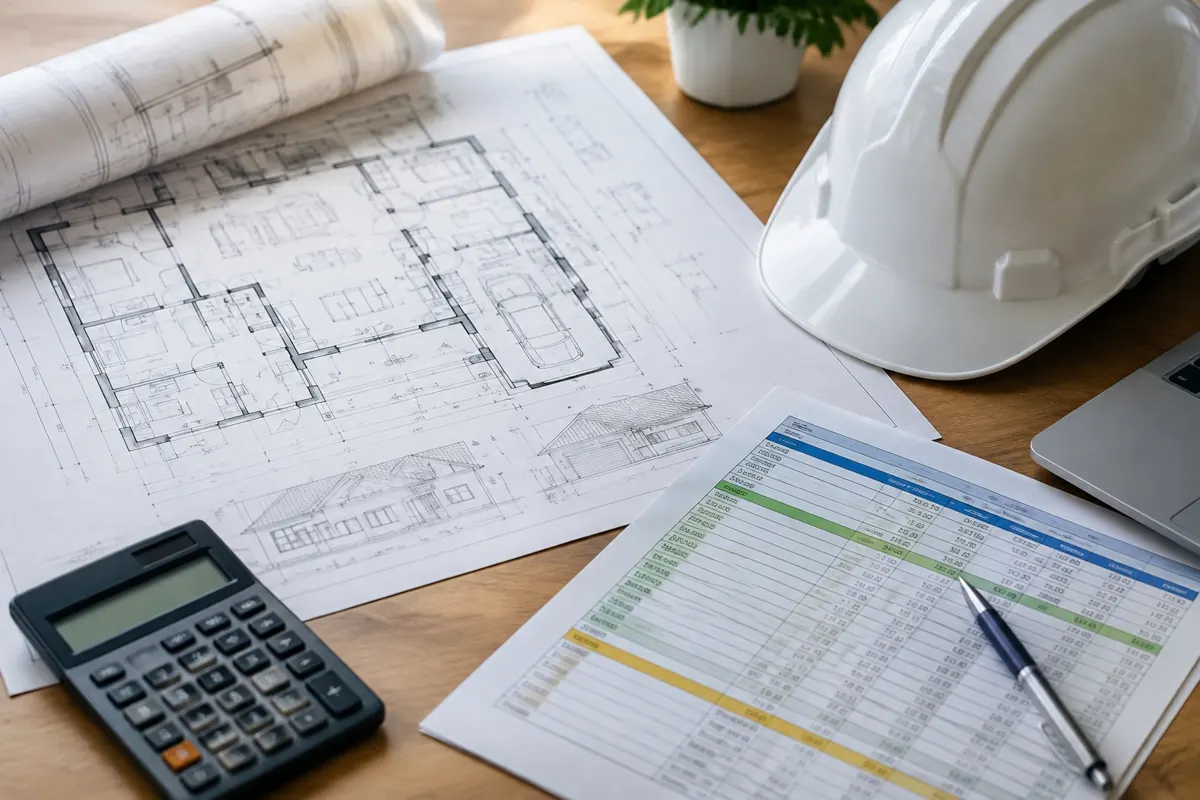
Underwriters and appraisers both rely on the same package: stamped plans, a specification sheet describing materials and finishes, and a line-item budget. The more specific these are, the smoother the file. A spec sheet that says 'tile' tells an appraiser much less than one that names porcelain plank in living areas and quartz counters in the kitchen.
The budget also needs a realistic contingency. Florida projects regularly meet surprises such as extra fill to raise a pad, a longer wait on windows that meet wind-load ratings, or upgraded electrical service. A contingency line, often a modest share of hard costs, gives the project room to absorb those changes without stopping work while everyone renegotiates.
Draws, Inspections and Staying on Schedule
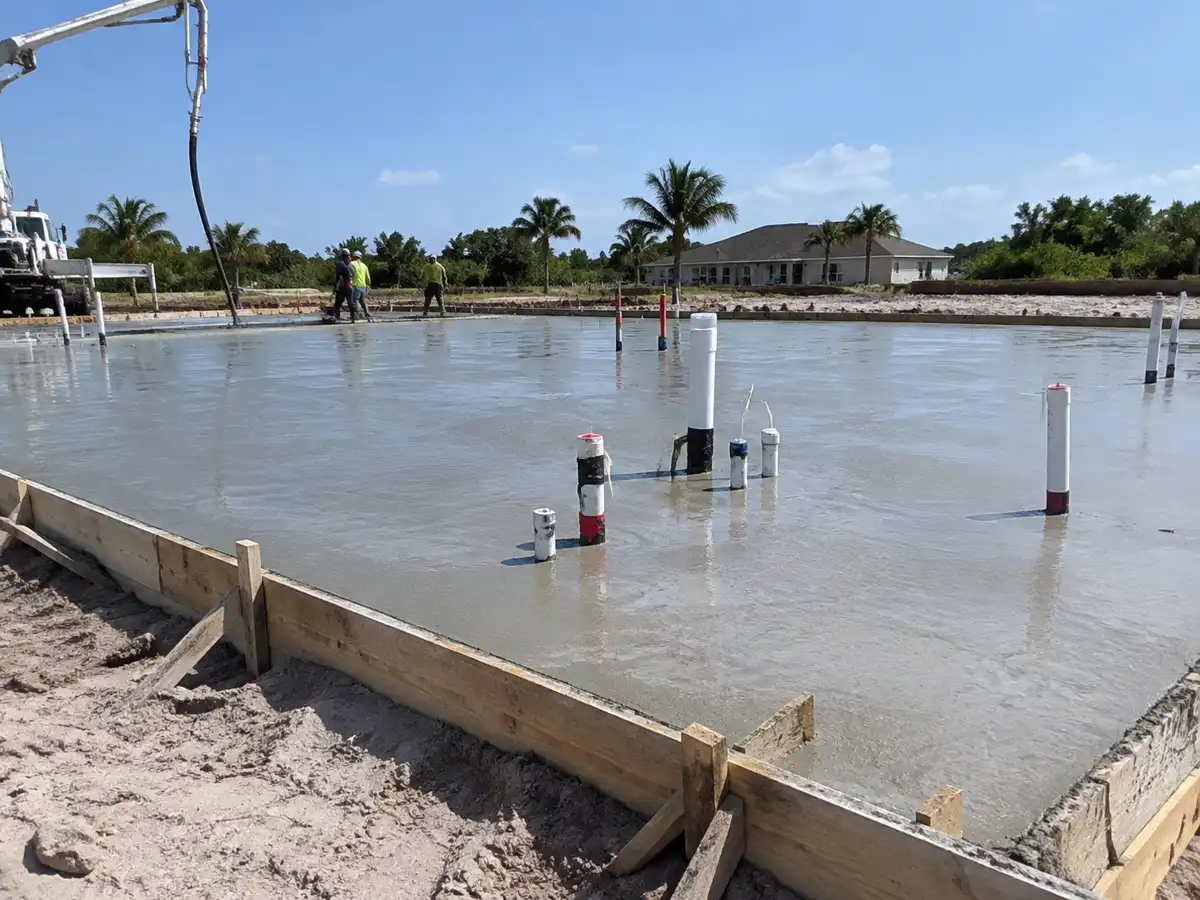
Most construction loans fund through four to seven draws tied to visible milestones: foundation, framing and dry-in, rough mechanicals, drywall, trim, and final. Before each draw, a third-party inspector visits the site, photographs progress and confirms the requested percentage of work is complete. Funds usually reach the builder within a few business days after approval.
Delays tend to come from paperwork rather than construction. Missing lien waivers, a draw request that does not match the budget lines, or an inspection scheduled before the work is actually finished can each slow a payout. We walk you and your builder through the draw process up front so requests go in clean and money keeps pace with the crews.
Building in Florida Flood Zones and Wind Regions
Much of Tampa Bay sits within FEMA flood zones, and coastal areas fall under strict wind-borne debris rules. Those realities show up in your loan. If the lot is in a special flood hazard area, flood insurance will be required, and the finished floor may need to sit at or above a set elevation, which can add fill, stem walls or pilings to the budget.
An elevation certificate, a survey and the county's flood review become part of the file. Wind requirements affect windows, doors, roof attachments and sometimes the cost of insurance. None of this rules a lot out, but it should be priced before you commit, and we encourage borrowers to check the parcel on the county's flood map early in the process.
Lots, Land and Getting Ready to Build
Some borrowers come to us owning land outright, which can count toward the equity a construction loan requires. Others need to buy a lot first. Lot and land financing exists for that step, though it typically asks for more cash down than a home loan because raw land is harder for a lender to resell.
Before buying, it pays to confirm zoning, utility access, septic or sewer availability, wetlands, and any deed restrictions or HOA architectural rules. A lot that needs a long driveway, a well and a septic system can carry very different site costs from a platted lot in a subdivision with water and sewer at the curb. Those numbers flow straight into the construction budget, so knowing them early prevents painful revisions later.
Investors, Spec Builders and Build-to-Rent
Not every Tampa build is a primary residence. Experienced builders construct spec homes to sell, and investors build single-family rentals or small multi-unit properties to hold. These projects use business-purpose construction financing, which focuses on the project's numbers, the borrower's track record, and the exit plan rather than on personal income alone.
Lenders in this space look closely at loan-to-cost, comparable sales or rents, and how many homes you have completed. Newer investors can often qualify with a strong builder and solid reserves, while seasoned builders may access higher leverage and faster draws. If your plan is to build, rent and refinance, we will talk through how the construction loan hands off to long-term financing before you break ground.
Timelines: From First Call to Certificate of Occupancy
Borrowers often ask how long the whole process takes. The honest answer is that it depends on how ready the plans are. If you already own a lot and have stamped plans and a signed builder contract, the loan can move toward closing within a couple of months. If you are still choosing a lot or interviewing builders, the financing conversation can start now, but the clock really begins once the project package is complete.
After closing, permitting and construction take over. Hillsborough, Pasco and Pinellas counties each have their own review times, and coastal projects may need extra floodplain review. Once permits issue, many single-family homes take most of a year to finish, with weather, material deliveries and inspections all playing a part. A realistic construction term, with some cushion, keeps the loan aligned with the actual build rather than an optimistic one.
Working With Your Builder Through the Loan
The builder is your partner throughout the life of a construction loan. They prepare the budget, submit draw requests, coordinate inspections and keep subcontractors paid. A builder who understands the lender's expectations can make the process feel straightforward, while one who is new to construction lending may need help learning the rhythm of draws and paperwork.
We make a point of talking with your builder early. We explain what the lender will need for approval, how draw requests should be prepared, and what documentation, such as lien waivers and invoices, will be expected along the way. That early coordination prevents the most common slowdowns and helps your builder stay focused on the job site instead of chasing funds.
Common Mistakes to Avoid on a Construction Loan
A few missteps show up again and again. Buying a lot before checking utilities, flood zone and restrictions can lead to site costs that break the budget. Choosing a builder based only on price, without confirming licensing, insurance and lender experience, can delay approval. And skipping a contingency line in the budget leaves no room for the surprises every build encounters.
Other mistakes happen during construction. Making changes without a formal change order, requesting draws before work is complete, or letting insurance lapse can all interrupt funding. Taking time up front to understand the loan's rules, and keeping open communication with your builder and loan officer, avoids most of these problems before they start.
Insurance During and After Construction
Insurance is easy to overlook until a lender asks for it. While the house is being built, a builder's risk policy protects the structure and materials against fire, wind, theft and similar losses. Your builder must also carry general liability and workers' compensation coverage, and the lender will usually want to be named on the relevant policies before the first draw.
If the lot is in a mapped flood zone, flood coverage is required as well, and its cost depends on the home's elevation and design. Once the certificate of occupancy is issued, the builder's risk policy gives way to a standard homeowners or landlord policy. Getting quotes early, especially for coastal Pinellas, Hillsborough South Shore and Manatee properties, helps you understand the true monthly cost of the finished home before you commit to plans.
New construction often has an advantage here. Homes built to the current Florida Building Code, with impact-rated openings and modern roof attachments, tend to qualify for wind mitigation credits that older houses cannot match.
Service Areas
Serving investors across Tampa Bay
Tampa sits at the center of our service area, and we work with projects across Hillsborough, Pasco, Pinellas, Hernando, Polk, Sarasota and Manatee counties. That reach covers master-planned growth corridors like Wesley Chapel and Riverview, rural acreage around Dade City and Brooksville, coastal rebuilds in St Petersburg and Apollo Beach, and established towns such as Lakeland and Bradenton.
Each county runs its own building department, impact fee schedule and flood review, and those details shape your budget and timeline. Choose a town below to read what building there looks like and how construction financing fits.
Frequently Asked Questions
How long does it take to close a construction loan in Tampa?
Many files close in roughly 30 to 60 days once plans, the builder package and the budget are complete. The appraisal on a home that does not exist yet and the builder review are the steps that most often set the pace.
Can I use land I already own toward my down payment?
Often, yes. Equity in a lot you own free and clear, or that has appreciated since purchase, can count toward the borrower contribution. The lender will confirm the value with an appraisal and title review.
Do I make payments while the house is being built?
Usually. Most construction loans charge interest only on the funds that have been drawn so far, so payments start small and grow as more of the budget is released.
What happens if construction costs go over budget?
Overruns are normally covered first by the contingency line in the budget, then by the borrower. That is why lenders want a realistic contingency and why change orders should be reviewed before work begins.
Can I build a home in Tampa with an FHA or VA construction loan?
Government-backed construction programs exist for primary residences, with their own builder and property standards. Availability varies by lender, so we review whether one fits your situation during the first conversation.
Does my builder need to be approved?
Yes. Lenders review the builder's license, insurance, experience and references before closing because the builder's ability to finish the home protects everyone involved.
Can I finance a manufactured or modular home?
Modular homes built to the Florida Building Code are often eligible for construction financing. Manufactured homes follow different rules and are handled by fewer programs, so ask early.
Ready to talk about your build?
Have a lot picked out or plans on the table? Tell us about your Tampa build and we will help you line up construction financing that fits the schedule.